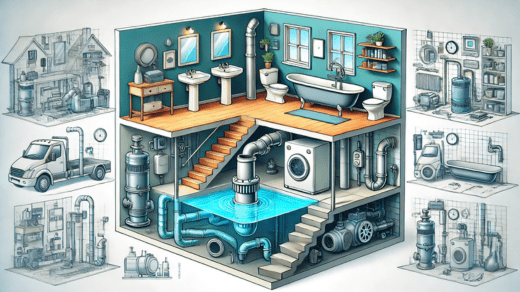
When deciding between gravity drainage and pump-assisted systems for wastewater management, it’s important to understand their differences, pros, cons, and ideal applications. Both systems are commonly used in residential and industrial settings, but they have distinct benefits depending on the specific needs of your setup. In this article, we’ll compare the two systems in terms of efficiency, cost, and performance to help you determine which solution is best suited for your needs.
Understanding Gravity Drainage
Gravity drainage systems are one of the most straightforward solutions for managing wastewater. As the name suggests, these systems rely solely on gravity to move wastewater from one point to another. Gravity drainage works by allowing wastewater to flow downhill through a series of pipes, making it ideal for installations where there is a natural slope, such as in basements or sloped terrain.
Pros of Gravity Drainage
- Low Maintenance
Gravity drainage systems are relatively simple and require minimal maintenance. Once set up, they typically run for years without requiring much attention, as there are no mechanical parts to wear out.- Cost-Effective
Since gravity drainage systems do not require pumps or motors, they are generally more cost-effective to install and maintain over time. The absence of complex components keeps both installation and operational costs lower.
- Energy Efficiency
With no need for external power sources to move water, gravity drainage is highly energy-efficient. It uses the natural force of gravity to do the work, reducing energy consumption.
- Reliability
These systems are reliable as long as the slope is properly designed. Gravity drainage systems typically operate continuously without interruption, and their performance is not affected by external factors like power outages.
- Cost-Effective
Cons of Gravity Drainage
- Limited to Sloped Terrain
The primary disadvantage of gravity drainage is that it requires a natural slope to function. In flat or uphill areas, gravity drainage can become impractical or inefficient.- Less Flexibility in Design
Gravity systems are limited in terms of installation flexibility. If your building or landscape does not have the necessary slope, retrofitting a gravity drainage system can be costly and complex.
- Risk of Blockages
Although they are simple systems, gravity drainage pipes can get blocked over time by debris or buildup. If the slope is insufficient, water may flow slowly or not at all, leading to clogging issues.
- Less Flexibility in Design
Understanding Pump-Assisted Systems
- Pump-assisted systems, on the other hand, utilize pumps to move wastewater, allowing for more flexibility in the design and installation. Unlike gravity drainage, which relies on natural slope, pump-assisted systems actively push water through pipes to reach the desired destination, making them ideal for situations where gravity drainage is not feasible.
- SFA offers a variety of pump-assisted systems that can handle everything from wastewater and sewage to heating condensates. These systems are often used in settings where the terrain is flat, or the wastewater needs to be lifted to a higher point. At such places a lifting station should be installed which is provided by SFA.
Pros of Pump-Assisted Systems
- Versatility
Pump-assisted systems can be installed in a variety of terrains, including flat surfaces or locations where gravity drainage would not work. This makes them ideal for basements, upper floors, and buildings without natural slopes.- Space-Efficient
Many pump-assisted systems, such as the Sanibroyeur and Sanicondens Pro, are compact and can be installed in smaller spaces. This is particularly useful in residential applications, where space may be limited.
- Greater Flexibility
These systems offer flexibility in design, allowing for longer pipe runs and the ability to pump water uphill. They are ideal for situations where traditional plumbing may be challenging or impossible to implement.
- Enhanced Performance for High-Demand Applications
Pump-assisted systems are particularly beneficial for commercial and industrial applications, where large volumes of wastewater or sewage need to be managed. Pumps provide the necessary power to move significant amounts of liquid efficiently.
- Space-Efficient
Cons of Pump-Assisted Systems
- Higher Installation and Operational Costs
Pump-assisted systems are generally more expensive to install and maintain than gravity drainage systems. The pumps require electrical connections, regular servicing, and potential repairs, which can add to the overall cost of ownership.- Energy Consumption
Unlike gravity drainage, pump-assisted systems consume electricity to operate. While they are more flexible and efficient, they do incur energy costs over time.
- Maintenance Requirements
Because pump-assisted systems contain mechanical components, they require more maintenance than gravity drainage systems. Regular checks and servicing are essential to ensure the pump operates efficiently.
- Risk of Mechanical Failure
As with any machine, there is always the risk of mechanical failure. If the pump stops working or breaks down, the entire system can be rendered ineffective, leading to costly repairs or replacements.
- Energy Consumption
Which One is Right for Your Setup?
The decision between gravity drainage and pump-assisted systems depends on several factors, including the layout of the building, budget, and the specific needs of the property. Here’s a breakdown of when each system is ideal:
When to Choose Gravity Drainage
- Sloped Land: If your property or building is located on sloped land, gravity drainage is the most efficient and cost-effective solution.
- Low-Maintenance Needs: If you want a reliable system with minimal ongoing maintenance, gravity drainage is a great option.
- Tight Budget: Gravity drainage systems are typically more affordable, both in terms of installation and long-term operation.
When to Choose Pump-Assisted Systems
- Flat Terrain: If your building is located on flat land or you need to move wastewater uphill, pump-assisted systems are the better choice.
- Flexibility in Design: If you have complex plumbing needs or require the ability to pump water over long distances or to higher levels, pump-assisted systems offer the flexibility you need.
- Industrial or Commercial Applications: For large-scale applications that involve heavy wastewater or sewage, pump-assisted systems are necessary to handle high volumes efficiently.
Conclusion
Both gravity drainage and pump-assisted systems offer valuable solutions for wastewater management, each with its own set of benefits and challenges. Gravity drainage systems are ideal for properties with natural slopes, offering low maintenance, low cost, and energy efficiency. However, for properties on flat land or those that require flexibility in design, pump-assisted systems provide the necessary power and versatility.
Ultimately, choosing the right system depends on your specific needs and the layout of your property. If you’re unsure which system is best suited for your setup, SFA’s experts can help guide you to the perfect solution, ensuring efficiency, reliability, and optimal performance for your wastewater management needs.